

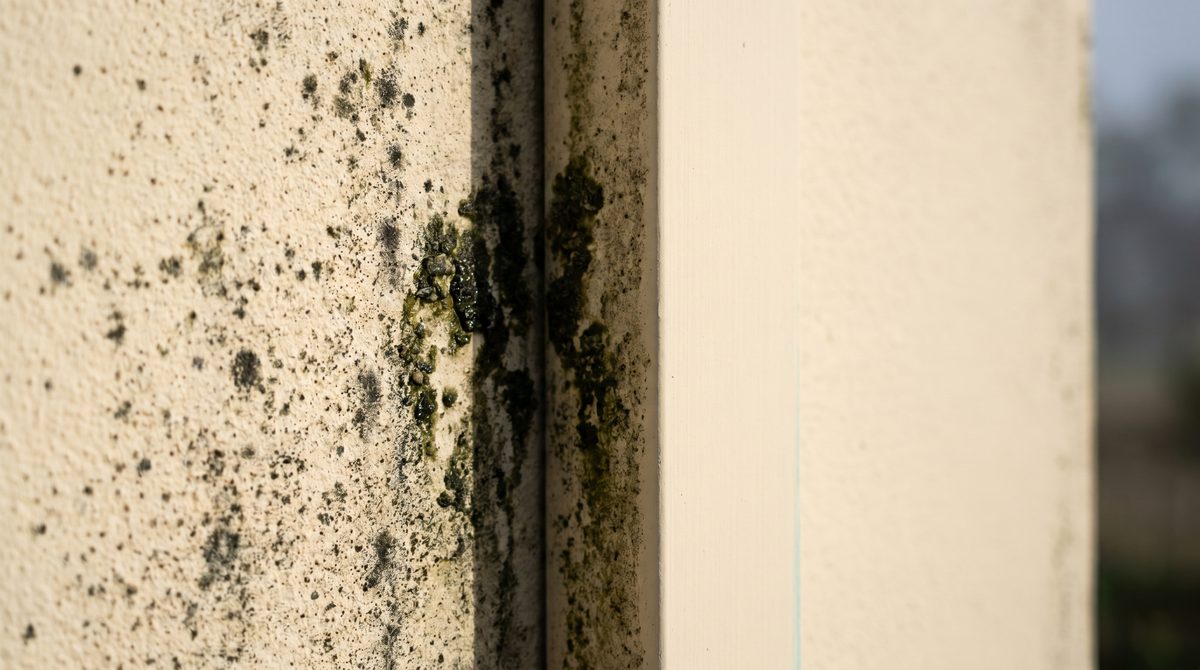
Mould on exterior walls is one of the most common maintenance issues facing Australian property owners, particularly in coastal and humid regions of NSW. Left untreated, exterior mould does more than diminish your property’s appearance. It progressively damages building materials, reduces property value, and can contribute to health problems for occupants. This guide covers how to identify, remove, and prevent mould on every common exterior wall type found on Australian homes.
Why Mould Grows on Exterior Walls
Mould is a living organism that requires three conditions to establish and thrive: moisture, organic matter, and limited direct sunlight. When all three conditions are present on an exterior wall surface, mould colonisation is virtually inevitable.
Moisture is the primary driver. This can come from several sources: rainfall that does not drain or dry quickly, rising damp from ground level, condensation caused by temperature differentials between the wall surface and the air, leaking gutters or downpipes that allow water to run down the wall face, and irrigation systems that spray directly onto walls. In coastal areas of NSW, salt air deposits a fine hygroscopic film on surfaces that actively draws moisture from the atmosphere, keeping walls damp even during periods without rainfall.
Organic matter provides the food source. This includes dust, pollen, leaf litter residue, insect matter, and the microscopic organic particles that settle on every outdoor surface. Even surfaces that appear clean to the naked eye carry enough organic material to support mould growth when moisture conditions are right.
Shade and orientation play a critical role. Walls that face south in the Southern Hemisphere receive the least direct sunlight throughout the year. UV radiation from direct sunlight is one of the most effective natural inhibitors of mould growth. South-facing walls, walls shaded by neighbouring buildings, and walls beneath dense tree canopy are consistently the first surfaces on a property to develop visible mould.
The Australian climate, particularly along the NSW coast from Sydney through the Central Coast to Newcastle, creates near-ideal conditions for exterior mould growth. Summer humidity regularly exceeds 70 per cent in coastal areas, and the combination of warm temperatures and available moisture means mould can establish a visible colony on an exterior wall within as little as four to six weeks under favourable conditions.
Types of Mould Found on Australian Home Exteriors
Understanding what is growing on your walls helps determine the appropriate removal method. While the term “mould” is used broadly, there are several distinct organisms commonly found on exterior walls in Australia.
Black Mould
Black mould appears as dark grey to black patches or streaks on wall surfaces. It is the most common type of mould found on rendered and painted exterior walls in NSW. Black mould thrives in consistently damp conditions and spreads rapidly once established. It penetrates into porous surfaces like render and mortar joints, making surface-only cleaning ineffective. The root system, known as hyphae, extends below the visible surface and will regenerate the colony if not killed at the source.
Green Algae
Green algae presents as a bright to dark green film or discolouration, often with a slightly slimy texture when wet. It is particularly prevalent on walls that receive consistent moisture from irrigation overspray, dripping air conditioning units, or water runoff from above. Green algae is photosynthetic, meaning it can grow on surfaces with some sunlight exposure, unlike true moulds which prefer shade. It is commonly found on the lower sections of exterior walls where splash-back from rain hitting hard surfaces keeps the wall constantly damp.
Lichen
Lichen appears as circular, crusty patches that are typically grey-green, yellow, or orange in colour. Unlike mould and algae, lichen is a composite organism formed by a symbiotic relationship between a fungus and an alga. It adheres extremely firmly to surfaces and is the most difficult organism to remove from exterior walls. Lichen is commonly found on brick, stone, and concrete surfaces and is particularly prevalent on properties near bushland or in areas with clean air. Its root-like structures, called rhizines, can physically penetrate into masonry surfaces and cause pitting over time.
Moss
Moss appears as soft, green, cushion-like growth and is most commonly found at the base of walls, in mortar joints, and on horizontal surfaces where moisture collects. Moss requires more consistent moisture than mould or algae and is typically found in areas with poor drainage or heavy shade. On brick walls, moss growing in mortar joints can accelerate joint deterioration by retaining moisture against the mortar and through the physical expansion of the moss itself. While less common on vertical wall surfaces than mould or algae, moss is a frequent problem on retaining walls, garden walls, and the lower courses of brick buildings.
How to Remove Mould from Different Wall Types
The correct removal method depends entirely on the wall material. What works safely on brick can damage render. What is effective on fibre cement may be inappropriate for timber. Below is a breakdown of the recommended approach for each common wall type.
Brick Walls
DIY method: For small areas of surface mould on brick, prepare a solution of one part household bleach to ten parts water. Apply with a stiff-bristled brush, scrubbing the affected area firmly. Allow the solution to sit for 10 to 15 minutes, then rinse thoroughly with a garden hose. Wear protective gloves, eye protection, and old clothing. Avoid using a wire brush, as this can damage the brick face and mortar joints. For a less harsh alternative, white vinegar applied undiluted can kill surface mould, though it is less effective than bleach on established colonies.
Professional method: A professional softwash treatment is the most effective approach for brick walls. Softwash uses biodegradable cleaning solutions applied at low pressure to kill mould, algae, and lichen at the root level without damaging the brick face or mortar joints. The solution penetrates into the porous brick surface where the mould root system resides, delivering results that last 12 to 24 months compared to the few weeks a DIY scrub typically provides. For heritage or soft-fired bricks, professional treatment is strongly recommended as incorrect DIY methods can cause irreversible damage.
Rendered Walls
DIY method: Render is more delicate than brick and requires a gentler approach. Use a soft-bristled brush or sponge with a solution of one part bleach to fifteen parts water. Apply gently without heavy scrubbing, as aggressive brushing can score and damage the render surface. Rinse with low-pressure water from a garden hose. Never use a high-pressure cleaner on render. The force can gouge the surface, penetrate through to the substrate, and force water into the wall cavity where it causes hidden damage including internal mould growth and structural deterioration.
Professional method: Softwash is the only recommended professional cleaning method for rendered walls. The cleaning solution is applied with purpose-built low-pressure equipment that delivers thorough coverage without mechanical stress on the render surface. The chemical action does the work rather than physical force. After adequate dwell time, the surface is rinsed at low pressure. This approach kills the mould root system within the render pores and provides residual protection against regrowth. For acrylic render systems, which are particularly common on newer NSW homes, softwash preserves the flexible coating that keeps the render waterproof and intact.
Weatherboard and Timber
DIY method: Timber surfaces require the gentlest approach of all wall types. Use a solution of oxygen bleach (sodium percarbonate) mixed according to the product directions, rather than chlorine bleach, which can strip colour from painted and stained timber. Apply with a soft brush or cloth, working gently along the grain of the timber. Rinse with low-pressure water. Do not use high-pressure cleaning on timber weatherboards. The force raises the grain, causes splintering, strips paint, and drives water behind the boards into the wall cavity.
Professional method: Professional softwash treatment for timber exteriors uses carefully calibrated solution strengths that are effective against mould without damaging paint systems or the timber itself. The solution is applied at minimal pressure and allowed to dwell before a gentle low-pressure rinse. For painted weatherboard homes, which are common across older suburbs of Sydney and the Central Coast, professional treatment ensures that existing paintwork is preserved while the mould is eliminated. If the paint system is already failing, a professional assessment will identify this before cleaning begins, as cleaning can accelerate paint failure on surfaces that are already compromised.
Fibre Cement Cladding
DIY method: Fibre cement products such as Scyon, Barestone, and legacy products like Hardiflex respond well to a diluted bleach solution (one part bleach to ten parts water) applied with a soft to medium brush. Scrub gently, allow the solution to work for 10 minutes, then rinse with a garden hose. Fibre cement is more robust than timber but still should not be subjected to high-pressure cleaning, as the force can damage the surface coating and drive moisture into the panel edges where it causes swelling and deterioration.
Professional method: Softwash is the recommended professional approach for fibre cement cladding. The cleaning solution is effective against all biological growth types and is safe for both painted and unpainted fibre cement surfaces. The low-pressure application protects panel edges and joints, which are the most vulnerable points on a fibre cement installation. Professional cleaning also allows for inspection of sealant joints and flashings, which can be identified and reported to the property owner for maintenance before they become moisture entry points.
DIY Mould Removal: What Works and What Does Not
DIY mould removal is appropriate in certain situations: small isolated patches of surface mould on accessible, ground-level walls where you can safely reach the affected area. For these limited cases, a bleach or vinegar solution, a suitable brush, and a garden hose can deliver acceptable short-term results.
However, it is important to understand the limitations of DIY methods. Most DIY cleaning addresses only the visible surface growth. The root system of the mould colony extends below the surface into the pores of the building material. When only the surface is cleaned, the root system remains intact and begins regenerating a new visible colony almost immediately. Most property owners who attempt DIY mould removal report that the mould returns within four to eight weeks.
Common DIY approaches that do not deliver lasting results include:
Pressure washing without chemicals. While a pressure washer will blast visible mould off the surface, it does not kill the organism. The root system survives, and without any chemical treatment, regrowth begins within days. Worse, pressure washing porous surfaces like render and brick opens up the pore structure, making it easier for mould to re-establish and harder to remove next time.
Sugar soap and general-purpose cleaners. These products are designed for removing dirt and grease, not for killing biological organisms. They may remove some surface discolouration but have no fungicidal action. The mould colony continues growing unaffected beneath the clean surface.
Painting over mould. This is one of the most common and counterproductive approaches. Paint applied over an active mould colony will blister and peel as the mould continues to grow beneath it. The moisture that the mould produces becomes trapped between the wall surface and the paint film, accelerating both paint failure and mould growth. Any surface that is to be repainted must be thoroughly cleaned and treated first.
DIY is not appropriate for large-scale mould coverage (more than a few square metres), mould on upper-storey walls that require ladder or elevated access, mould on delicate surfaces like heritage brick or aged render, or situations where the mould keeps returning despite repeated cleaning. In these cases, professional treatment is the cost-effective solution.
Professional Mould Removal: How Softwash Works
Professional softwash is the industry-standard method for removing mould from exterior walls on residential and commercial properties. Unlike DIY surface cleaning, softwash eliminates the entire mould colony, including the root system embedded within the building material. The process follows five key steps.
Step 1: Assessment. A qualified operator inspects every wall surface on the property, identifying the type of biological growth present, the wall material, its current condition, and any areas of existing damage or vulnerability. This assessment determines the exact cleaning solution formula, concentration, and dwell time required for each surface.
Step 2: Preparation and protection. Surrounding vegetation, garden beds, and sensitive surfaces are pre-wet and protected before any cleaning solution is applied. Windows and doors are checked to ensure they are closed. Downpipes and drainage paths are noted to manage chemical runoff responsibly.
Step 3: Solution application. The biodegradable cleaning solution is applied to the wall surface using purpose-built low-pressure equipment. The solution is formulated to penetrate into the pores of the building material where the mould root system resides. Application pressure is kept low, typically under 100 PSI, to avoid any mechanical stress on the wall surface.
Step 4: Dwell time. The solution is allowed to remain on the surface for a calibrated period, typically 15 to 30 minutes depending on the severity of growth and the wall material. During this time, the active ingredients break down and kill the mould colony from root to surface. Heavily affected areas may receive a second application.
Step 5: Rinse and preventative treatment. The surface is rinsed with low-pressure water to remove the dead biological material and spent cleaning solution. In many cases, a residual preventative treatment is applied that continues to inhibit biological regrowth for months after the clean. This residual action is one of the key advantages softwash holds over both DIY methods and high-pressure cleaning.
Professional softwash results typically last 12 to 24 months. Properties with favourable conditions, such as good sun exposure, adequate airflow, and well-maintained drainage, often see results lasting closer to the 24-month mark. Coastal properties with heavy shade and high humidity may see earlier regrowth, closer to the 12-month mark. For context on how salt air accelerates biological growth on coastal properties, our dedicated guide covers this in detail.
When comparing cost, a single professional softwash treatment that lasts 12 to 24 months is typically more economical than repeated DIY attempts every four to eight weeks, once you factor in the cost of cleaning products, equipment, your time, and the risk of surface damage from incorrect methods.
Preventing Mould from Returning
Removing existing mould is only half the solution. Preventing regrowth requires addressing the environmental conditions that allowed the mould to establish in the first place.
Improve drainage around the building. Ensure that ground levels slope away from the wall base so that rainwater drains away from the building rather than pooling against it. Check that stormwater drains and pits are clear and functioning. Poor drainage at the base of walls is one of the most common contributors to persistent exterior mould.
Trim trees and vegetation. Overhanging branches and dense garden plantings against walls reduce airflow and create permanent shade zones where mould thrives. Maintain a clearance of at least 300 millimetres between vegetation and wall surfaces. Trim overhanging branches to allow more direct sunlight onto affected walls, particularly south-facing elevations.
Repair gutters and downpipes. Leaking gutters, overflowing gutters, and disconnected or damaged downpipes allow water to run directly down wall surfaces. This creates a constant moisture source that guarantees mould regrowth regardless of how thoroughly the wall is cleaned. Regular gutter cleaning and maintenance is one of the most effective preventative measures against wall mould.
Improve ventilation. In areas where walls are enclosed or sheltered, such as between closely spaced buildings, enclosed courtyards, or behind solid fences, air circulation is restricted and moisture lingers. Where possible, improve airflow to these areas by adjusting fence designs, opening up enclosed spaces, or installing ventilation where appropriate.
Schedule regular cleaning. The most effective long-term strategy is a regular professional cleaning schedule. For most NSW properties, an annual or biannual softwash treatment keeps mould growth under control before it reaches the point where it causes visible damage or health concerns. Our guide on how often to clean your roof and exterior provides detailed scheduling recommendations by property type and location.
Health Risks of Exterior Mould
While exterior mould is often viewed as purely a cosmetic issue, it does carry genuine health implications that property owners should be aware of. Mould reproduces by releasing microscopic spores into the air. These spores are carried by wind and air currents, and a large exterior mould colony can significantly elevate the spore count in the air around your property.
Airborne mould spores enter homes through open windows and doors, ventilation systems, gaps in the building envelope, and on clothing and shoes. Once inside, these spores can settle on interior surfaces and, if moisture conditions permit, establish interior mould colonies. The link between high exterior mould loads and eventual interior mould problems is well documented in building science research.
Respiratory effects are the most common health concern associated with elevated mould spore exposure. Symptoms can include nasal congestion, throat irritation, coughing, wheezing, and eye irritation. For individuals with existing respiratory conditions such as asthma or chronic obstructive pulmonary disease, mould spore exposure can trigger acute episodes and worsen symptoms.
Vulnerable populations face higher risks. Children, elderly people, pregnant women, and individuals with compromised immune systems are more susceptible to the health effects of mould exposure. The Australian Department of Health identifies mould exposure as a significant indoor air quality concern and recommends prompt remediation of mould growth both inside and outside the home.
Allergic reactions to mould are common and can range from mild hay fever-like symptoms to more severe responses in sensitised individuals. According to the Australasian Society of Clinical Immunology and Allergy, approximately 10 per cent of the Australian population has some degree of mould sensitivity. For these individuals, living in a property with significant exterior mould growth can cause chronic low-level symptoms that are often attributed to other causes.
Addressing exterior mould is therefore not purely a maintenance or aesthetic decision. It is a measure that directly contributes to the health and comfort of everyone who lives in or visits the property.
Frequently Asked Questions
What is the best way to remove mould from exterior walls?
The most effective long-term method is professional softwash treatment, which kills mould at the root level using biodegradable cleaning solutions applied at low pressure. For small areas of surface mould on hard surfaces like brick, a DIY scrub with a diluted bleach or white vinegar solution can provide temporary relief. However, without addressing the root system and underlying moisture conditions, mould typically returns within weeks.
How often should you clean the exterior of your house?
Most Australian homes benefit from a full exterior clean every 12 to 24 months. Coastal properties in NSW, particularly those on the Central Coast and in Newcastle, often require cleaning every 12 months due to higher humidity and salt air exposure. Properties surrounded by dense vegetation or with significant south-facing wall area may also need more frequent attention.
Can mould on outside walls affect your health?
Yes. Exterior mould produces airborne spores that can enter your home through windows, doors, and ventilation systems. Prolonged exposure to elevated mould spore levels is linked to respiratory irritation, allergic reactions, and worsening of asthma symptoms. Children, elderly people, and those with compromised immune systems are particularly vulnerable to health effects from mould exposure.
Does exterior mould mean there is mould inside?
Not necessarily, but it is a warning sign. Exterior mould indicates that moisture conditions on your property are favourable for mould growth. If moisture is penetrating through cracks in render, failed seals around windows, or through the wall cavity itself, interior mould growth is possible. A professional assessment can determine whether exterior mould has compromised the building envelope.
How long does professional mould treatment last?
Professional softwash mould treatment typically lasts between 12 and 24 months before any visible regrowth appears. The exact duration depends on the property location, surrounding vegetation, shade coverage, wall orientation, and local humidity levels. Coastal properties tend to see regrowth sooner than inland properties. Preventative maintenance such as improving drainage and trimming vegetation can extend results further.
Get Professional Mould Removal for Your Property
If mould on your exterior walls has become persistent, widespread, or difficult to manage with DIY methods, professional softwash treatment will resolve the problem and protect your walls for the long term. We service properties across Sydney, the Central Coast, and Newcastle, and provide free, no-obligation assessments and quotes. Get in touch through our contact page or call us on 0418 167 798.